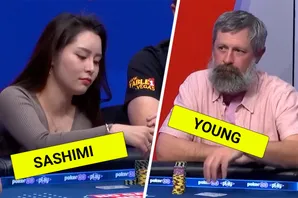
In this video, Alexander Fitzgerald breaks down some exploits you can use when playing against opponents who suddenly find themselves deep-stacked in cash games. This situation can be tricky for many players, as they may not have much experience in deep-stacked poker (generally defined as having 150+ big blinds).
Here are some key takeaways and strategies you can implement to take advantage of deep-stacked opponents:
1. Exploit Overvaluing One Pair
-
The Overvaluation of One Pair: Many players, especially those new to deep-stacked poker, tend to overvalue one-pair hands, particularly overpairs or mediocre two-pairs. This is because, with a stack of 150+ big blinds, calling off with a mediocre hand becomes a significant mistake.
-
Example: Let’s say you have a hand like a suited ace, a pocket pair, or a suited connector—hands that can make flushes, straights, sets, or two-pairs. These hands can beat many of your opponent’s one-pair or two-pair hands.
-
Strategy: When you hit one of these strong hands, bet big—aim for 70% to 80% of the pot. Deep-stacked opponents often think, “Oh, it’s just 80% of the pot relative to my stack size.” This leads them to call off more often than they should, even with a hand that’s not strong enough to justify the call.
2. Bluffing Deep-Stacked Opponents
Bluffing deep-stacked players can be effective when you focus on certain types of boards. Here’s how to execute a bluff effectively:
-
Use Boards with Flush Draws: If the board has a flush draw and your opponent has checked, check-called, or checked back, it typically means they don’t have a strong hand (like a set or two-pair) because they would have bet for value or to protect their hand.
-
When They Check or Call: If your opponent checks or calls on such a board, it’s likely they only have one pair—they may be holding a top pair or second pair. This opens the door for you to put pressure on them.
-
Overbet Strategy: In these situations, Fitzgerald recommends overbetting—you might bet an amount equal to or larger than the pot, which could be 190 big blinds or more. Your opponent will then face a difficult decision, especially if they have a mediocre hand. They’ll be unsure whether to call with a weak overpair or a marginal top pair.
-
Why Overbet Works: When you overbet, it forces your opponent to think through the situation logically and feel unsure about their hand’s strength in relation to the size of your bet. This uncertainty can often lead them to fold, giving you a significant advantage.
3. Experiment with These Exploits
Fitzgerald advises you to experiment with these strategies when you’re up against opponents who aren’t very experienced in deep-stacked play. Over time, you’ll learn to adjust and fine-tune these tactics to maximize your edge at the table.
In Summary
-
Bet big with strong hands when you have a chance to capitalize on overvalued one-pair hands from deep-stacked opponents.
-
Bluff effectively with overbets on boards where your opponent is likely holding just one pair, especially on flush draw boards.
-
Focus on psychological pressure, using larger bets to exploit the uncertainty your opponent faces with big stacks.
By using these strategic exploits, you can maximize your value against players unfamiliar with deep-stacked cash play, and potentially build your chip stack in a cash game setting.