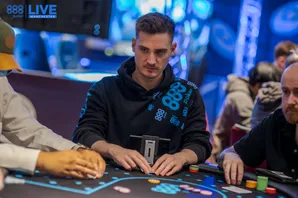
Sam Forde shares his insights from a Run It Once bootcamp, titled ‘Playing Against Recreationals’, reflecting on the psychological struggles he faced when playing against recreational players, or “recs.” He admits to having spent much of his career focused on studying solvers and battling fellow professionals (regs), neglecting the nuances of playing against weaker, less predictable opponents. This oversight led to struggles that were often masked by frustration, judgment, and impulsive decisions.
The Struggle Against Recs
Forde recalls how, for a long time, he would autopilot against recreational players, using a baseline strategy or over-adjusting out of fear. One common issue he highlights is his response to aggressive players (so-called maniacs). Instead of exploiting their tendencies, he found himself engaging in reckless battles, trying to match their aggression, which often led to suboptimal play.
“It’s a natural impulse to want to stand your ground.”
This impulsive response to aggression, even when it’s not strategically sound, mirrors the way many players react to pressure at the tables, particularly when facing opponents who seem to be pushing them around. Forde compares the mental dialogue that goes on in his head during these moments to a chaotic back-and-forth between competing versions of himself—Gung-ho Hero, Analytical Hero, and Hype-man—all trying to rationalize decisions that are more driven by emotion than logic.
The Battle Within: Emotional vs. Logical Thinking
Forde compares the mental conflict to a conversation between three parts of himself:
-
Gung-ho Hero: Eager to fight back against aggression by widening his 4-bet range.
-
Analytical Hero: Cautious, questioning whether this is a good strategy against someone who doesn’t fold easily.
-
Hype-man: Pumped up, encouraging more aggression to “stand tall” and avoid being pushed around.
This chaotic internal dialogue often leads to decisions driven by emotion and reaction, rather than calm, reasoned analysis. The challenge in these situations is not just in understanding the opponent’s strategy but also in resisting the natural impulse to react defensively or aggressively without considering the full context.
The Importance of Awareness and Mental Clarity
One of the key difficulties, Forde explains, is seeing the larger picture—understanding the range of possibilities and avoiding tunnel vision. For example, when facing a frequent check-raiser, the right strategy might not be to simply overfold but to consider their likely check-calling range and adjust accordingly. This requires a level of mental clarity and a deep understanding of the game tree, which can be hard to maintain when emotions are running high.
“The problem is that we can get quite caught up in this. We have all sorts of judgments (‘I should be managing better!’) and tricky feelings (e.g. annoyance/discomfort).”
Fear and Self-Preoccupation: The Roots of Tilt
Forde delves deeper into the psychological aspects that contribute to poor play, especially when dealing with recs. He suggests that much of the poor decision-making stems from fear—fear of being exploited, fear of feeling weak, or fear of losing control. These fears are often tied to deeper psychological needs, such as a desire to feel competent, to maintain one’s self-esteem, or to survive in the game.
When these fears are not managed, they lead to self-preoccupation—a cycle of judgment, frustration, and shame that undermines a player’s ability to think clearly. Forde describes this as a “merry-go-round” of negative emotions and thoughts, where players get trapped in their own self-judgments (“I shouldn’t get so tilted”) and feelings of inadequacy.
“When there’s a part of our game of which we’re not proud, our reaction can be to ignore it, to hide.”
Shifting Focus: Embracing Curiosity
The antidote to self-preoccupation, according to Forde, is to shift focus away from oneself and onto the opponent. Instead of thinking about how the situation is affecting you, ask questions like: What is my opponent thinking? What might they be experiencing right now? This helps to cultivate curiosity about the opponent’s mindset and potential mistakes, instead of reacting emotionally to their actions.
Additionally, Forde encourages players to focus on the creative potential in each situation. By asking questions like, What mistakes are available in this spot? What mischief can I create in response?, players can move away from defensiveness and approach the situation with a sense of exploration and opportunity.
Embracing Imperfection
Finally, Forde reminds players that it’s OK to have areas of their game that need improvement. In fact, embracing those imperfections allows room for growth and better decision-making in the future. Quoting Leonard Cohen, Forde reflects:
“There’s a crack in everything. That’s how the light gets in.”
Key Takeaways for Playing Against Recreationals:
-
Self-awareness: Understand when emotional reactions are driving your decisions, and learn to recognize the impulse to “stand your ground” unnecessarily.
-
Curiosity about the opponent: Focus on understanding your opponent’s mindset and mistakes, rather than on your own fears or judgments.
-
Mental clarity: Avoid getting lost in the “game tree” and instead approach situations with a calm, analytical mindset.
-
Embrace imperfection: Recognize that no one has a perfect game, and growth comes from acknowledging and improving weaknesses.
By fostering a mindset of curiosity, calm, and self-awareness, players can break free from the self-preoccupation that often leads to poor decisions and instead focus on exploiting weaknesses in recreational players’ strategies.